
Scent Guide
What Is Patchouli? How It Smells and How It's Used
Sep
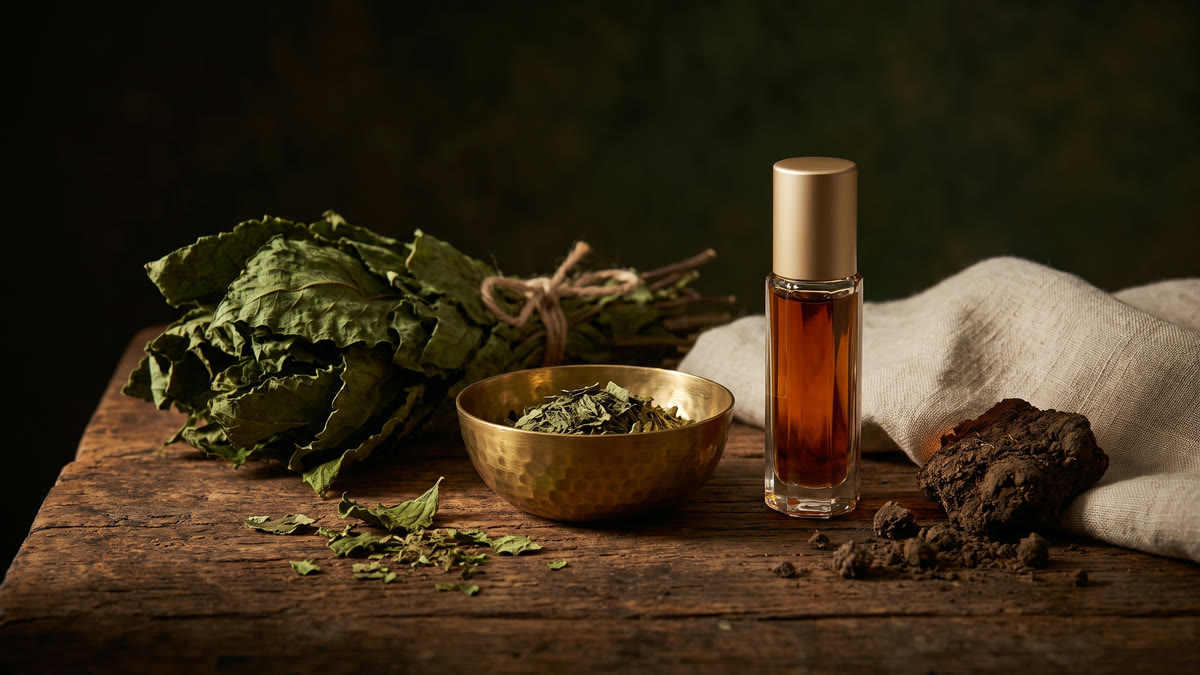
What is patchouli? Patchouli is a dark, earthy-smelling extract obtained from the dried leaves of Pogostemon cablin, a plant that grows in Southeast Asia. It is one of the most recognizable notes in perfumery: once you learn it, you can pick it out in hundreds of fragrances. In this guide we explain how patchouli smells, where it comes from and how it is used.
What Does Patchouli Smell Like?
Patchouli is one of the most “earthy” notes in the world of scent. It’s hard to describe because it isn’t one-dimensional; it carries several layers:
- Earthy: It recalls damp soil after rain.
- Woody: It suggests dry bark and roots.
- Slightly sweet: Deep down there is a chocolatey, balsamic sweetness.
- Camphorous: At the top you can sense a slightly sharp, almost minty opening.
This complex structure makes patchouli a polarizing scent: people who love it really love it, and people who don’t find it “heavy.” The refined patchouli used in modern perfumery, however, is much cleaner and softer than the patchouli of the past.
Where Does Patchouli Come From?
The patchouli plant grows in Indonesia, India, Malaysia and the Philippines. It belongs to the mint family, yet its scent is the exact opposite of mint.
An interesting detail: patchouli leaves are almost odorless when fresh. Their characteristic scent appears only after the leaves are dried and fermented. That’s why the resting period after harvest directly shapes the quality of the scent; well-rested patchouli is softer and sweeter.
Another trait: patchouli is one of the few scents that improves with age. Aged patchouli oil is rounder and deeper than fresh; it matures much like wine.
Where Does Patchouli Grow, and Can You Grow It at Home?
Patchouli (Pogostemon cablin) is a shrubby member of the mint family that grows in tropical climates. It needs a warm, humid, frost-free environment, so it isn’t grown commercially outdoors in temperate regions; most of the world’s patchouli oil comes from Indonesia.
In cooler climates patchouli can be grown as an ornamental plant in a pot or greenhouse indoors. It grows in a bright spot that stays warm in winter, in moist soil. Its dried leaves give off a light scent, but the rich scent used in perfumery comes from the oil obtained by fermenting the leaves and steam-distilling them.
If you’d like to try Indonesian patchouli as an essential oil, visit our Patchouli Oil page.
Why Is Patchouli Used So Widely?
Patchouli has two big roles in perfumery:
- Fixative: Thanks to its heavy molecular structure, it helps the more volatile notes last longer. Adding patchouli to a composition extends the life of the scent.
- Depth: It gives floral and fruity scents an earthy foundation, so the scent settles instead of “floating.”
That’s why patchouli is a classic building block of chypre and amber (oriental) perfumes. Many modern niche fragrances have patchouli in the base as well.
Patchouli vs. Other Woody Notes
- Patchouli: Earthy, damp, slightly chocolatey. A ground-level scent.
- Cedar: Dry, clean, like pencil shavings. Sharper and airier.
- Sandalwood: Creamy, milky, soft. The sweetest of the woods.
- Oud: Resinous, smoky, dense. The heaviest and most expensive.
If you’re curious about the differences within the woody family, compare the scent profiles on our sandalwood and cedarwood perfume oil pages.
Who Is Patchouli For?
- People who love earthy, woody scents with character
- Anyone tired of sweet and floral perfumes
- Fall and winter wear
- Anyone who wants a long-lasting base note
Who it isn’t for: People who prefer fresh, clean, light scents. Patchouli is a note that makes itself known; if you want lightness, white musk or citrus-based scents are a better choice.
Patchouli in Tradition
Patchouli oil has a long history in traditional practices, and in India it was also used to protect textiles from moths and insects. That’s why the Kashmir shawls that reached Europe in the 19th century smelled of patchouli.
A note for clarity: There are many popular beliefs about patchouli having medicinal effects. They are part of traditional culture; we offer patchouli as a fragrance product and make no health, wellness or aphrodisiac claims. For health questions, please consult your doctor.
How to Wear a Patchouli Perfume Oil
- Use very little. Patchouli is among the densest notes; even half a drop is noticeable.
- Layer it. Worn under a floral or citrus scent, it adds depth and longevity.
- It lasts on fabric. On a jacket or scarf it can be noticed for days.
- Use it in the closet. A drop on a cotton ball scents your clothes, in the spirit of the old textile tradition.
- It balances candles. It cuts the sugariness of sweet scents.
- Essential oil: If you use the essential oil, dilute it in a carrier oil and test a small area first.
Frequently Asked Questions
What does patchouli smell like?
Earthy, woody and slightly sweet: somewhere between damp soil after rain and dry tree bark, with a chocolatey note deep down.
Is patchouli a women’s or a men’s scent?
Unisex. The notes around it decide the direction: with rose it feels feminine, with vetiver and leather it feels masculine.
Why does patchouli last so long?
It’s made up of heavy molecules that evaporate very slowly, which is why perfumers use it as a fixative.
What’s the difference between patchouli and sandalwood?
Patchouli is earthy and damp, sandalwood is creamy and milky. Both belong to the woody family, but their characters are opposites.
Is aged patchouli better?
Usually, yes. Patchouli is one of the rare scents that softens and deepens with time.
Where does the word “patchouli” come from?
It is usually traced to a Tamil word meaning “green leaf.” It’s the name of both the plant and the fragrance oil made from it.
Summary
Patchouli is one of perfumery’s most characterful and longest-lasting notes: earthy, woody and slightly sweet. The fresh leaf is odorless and gains its scent through drying and fermentation. It gives compositions both depth and staying power.
To explore the woody family, browse our perfume oils, and read how scent layers work in our perfume oil guide.
Patchouli oil and perfume oils with patchouli notes

Essential Oils


Men's


Men's

Perfume Oils
