
How-To Guide
Bakhoor Burner Guide: Types and How to Use One

Oct
A bakhoor burner (incense burner, known in Arabic as a mabkhara) is a vessel that heats fragrant materials such as bakhoor, agarwood or resin so that their scent spreads through a room. There are three basic types: charcoal, electric and tealight (oil) burners. Unlike an incense holder, a bakhoor burner doesn’t hold a burning stick; it slowly warms fragrant pieces over an ember or a heat source. In this guide we cover the types of bakhoor burners, how to use them step by step, what to put in them and how to use them safely.
What Is a Bakhoor Burner?
The Turkish word for it, buhurdanlık, combines the Arabic bakhūr (incense, fragrant smoke) with the Persian suffix -dān (vessel), so it literally means “incense vessel.” On the Arabian Peninsula it’s called a mabkhara. In the Ottoman world, ornate censers of brass, silver and copper were indispensable in palaces, mosques and mansions.
The idea is simple: the fragrant material isn’t burned directly but heated from below. That way the scent opens up slowly instead of turning into a burnt smell.
Bakhoor Burner or Incense Holder?
The two are often confused, but they do different jobs:
- Incense holder: Holds a stick or cone. The incense burns on its own; the holder only catches the ash.
- Bakhoor burner: Heats materials that don’t burn on their own (agarwood chips, bakhoor blends, resin) with charcoal or another heat source.
If you use sticks and cones, our guide How to Light Incense is for you. If you’ll be using bakhoor, agarwood or resin, you need a burner.
Types of Bakhoor Burners
Charcoal burner
The most traditional type. A quick-lighting incense charcoal is placed inside and turns into a glowing ember; the fragrant material goes on top of it. It gives the strongest, most traditional scent, and also the most smoke.
Electric bakhoor burner
Instead of charcoal, it uses an electric heating plate. The heat is adjustable; on low, the scent opens with very little smoke. It’s the most practical option for apartments, closed rooms and frequent use, with no charcoal to light and no ash to clean.
Tealight (oil) burner
A tealight candle sits underneath and a small dish on top. You fill the dish with water and add a few drops of fragrance oil. As the candle warms the water, the scent spreads. It gives off no smoke and is used for liquid fragrance oils, not bakhoor pieces.
How to Use a Charcoal Bakhoor Burner
- Prepare the spot. Set the burner on a flat, heat-resistant surface, away from curtains and fabrics.
- Light the charcoal. Hold the incense charcoal with tongs and light its edge with a lighter. Quick-lighting charcoal sparks and catches on its own.
- Wait. Place the charcoal in the burner and wait 3 to 5 minutes until it turns gray and glows. Bakhoor added too early burns and smells bitter.
- Add the bakhoor. Place a small piece of agarwood or a pinch of bakhoor blend on the ember. Less is better; you can add more later.
- Spread the scent. Carry the burner around the room, or hold it under clothing for a few seconds.
- Put it out. When you’re done, let the charcoal burn out on its own or cover it with sand or ash. Don’t pour water on it; hot metal and ceramic can crack.
How to Use an Electric Bakhoor Burner
- Plug the burner in and start at the lowest heat setting.
- Once the plate is warm, place an agarwood or bakhoor piece on it.
- If the scent isn’t opening, raise the heat gradually. If the smoke thickens, lower it.
- When you’re finished, turn it off and, once the plate has cooled, wipe away resin residue with a dry cloth.
What Do You Put in a Bakhoor Burner?
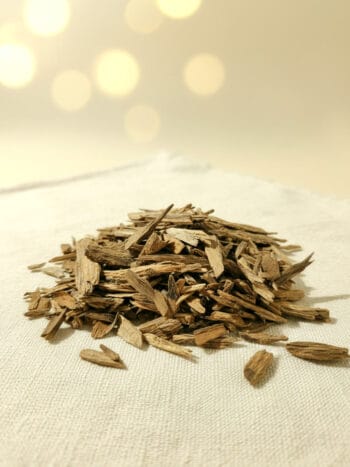
- Agarwood (oud) chips: The most precious material for a burner. They give a resinous, deep scent. For details, see Agarwood Incense: What Agarwood Is and How to Burn It.
- Bakhoor blends: Pieces made by kneading agarwood chips with fragrance oils, sugar and resins. Sweet and intense.
- Resins: Frankincense, myrrh, benzoin, labdanum.
- Dried botanicals: Rose petals, lavender, sage.
To learn what bakhoor is and what it’s made of, read What Is Bakhoor?
Which Oils Can You Use in a Burner?
This applies to tealight (oil) burners. Fill the dish with water and add 5 to 10 drops of fragrance oil. Oils you can use:
- Perfume oils: Alcohol-free and concentrated, so a few drops are enough. Woody and amber perfume oils spread more evenly with heat.
- Essential oils: Lavender, patchouli and sandalwood oil can be added to the water.
Caution: Never use the dish dry with oil alone. Oil heated directly burns, its scent spoils and it stains the dish. Top up the water as it runs low.
Is Using a Bakhoor Burner Safe?
Any method that involves burning (charcoal, incense, bakhoor) releases smoke and particles into the air. So:
- Use the burner for short sessions; turn it off once the room is scented.
- Ventilate the room during and after use.
- Don’t use it in a room with a baby, young children or anyone with breathing sensitivities.
- If you don’t want smoke, choose an electric or tealight burner.
Claims that burning bakhoor is a form of medicine have no scientific basis; it’s best to think of a burner as a fragrance tool.
Why Burn Bakhoor at Home?
Burning bakhoor is one of the oldest ways to scent a home. It’s burned when welcoming guests, on Fridays and holidays, or in the evening to create a calm atmosphere. The scent settles into curtains, rugs and clothes and lingers for hours.
Bakhoor in Tradition
Pleasant fragrance is an encouraged custom in Islamic culture. Narrations report that the Prophet loved good scents and perfumed himself with the smoke of aloeswood. That’s why bakhoor is burned in many homes on Fridays and holiday mornings, and burners are carried around in mosques. In the Ottoman world, too, the censer was a sign of respect for guests.
How to Clean a Bakhoor Burner
- Charcoal: Empty the ash once it has cooled completely. Wipe resin stains off metal with hot water and a little soap; for brass burners, a mix of lemon and baking soda works well.
- Electric: Wipe the plate while cool with a dry cloth or one lightly dampened with alcohol; never put the device in water.
- Tealight: Wash the dish in warm, soapy water; leftover oil will mix with the next scent.
Frequently Asked Questions
What is a bakhoor burner used for?
It heats fragrant materials that don’t burn on their own, such as agarwood, bakhoor and resin, to spread their scent through a room.
Can you burn bakhoor without charcoal?
Yes, with an electric burner. It needs no charcoal, gives off less smoke and has adjustable heat.
How long does incense charcoal burn?
Quick-lighting incense charcoal usually stays lit for 30 to 60 minutes. You can add bakhoor several times during that time.
Can you put perfume oil in a bakhoor burner?
In a tealight (oil) burner, you can add a few drops of perfume oil to the water. Liquid oils aren’t used in a charcoal burner.
How long does bakhoor give off scent in a burner?
A small agarwood chip gives off scent for 5 to 10 minutes on an ember; the scent lingers in the room and on fabrics for hours.
Summary
A bakhoor burner heats fragrant materials without burning them, spreading their scent. The charcoal type is the most traditional, the electric type the most practical and the tealight type the smoke-free option. A small amount of material, short sessions and good ventilation are how you get the best from a burner.
If you’re looking for genuine agarwood pieces for your burner, see our agarwood (oud) chips; to use a tealight burner, browse our essential oils and perfume oils.
Scents for use in an oil burner


Essential Oils

Perfume Oils
